


Comfortable Ankle Boots for Women: How to Choose a Stylish Pair That Won’t Hurt
Choosing comfortable ankle boots doesn’t mean giving up on style. Learn how to assess the fit, shape, heel and materials to find a pair that will keep you comfortable for hours.
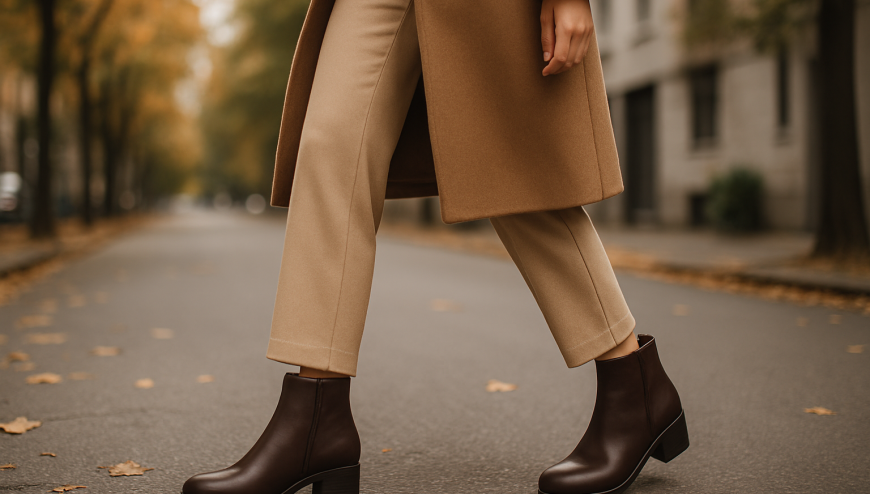
Ankle boots can transform an autumn or winter outfit, but they can also become a nuisance if they do not fit the foot properly. Comfort does not depend solely on design: the last, heel height, sole flexibility and interior space are decisive factors. In this guide, you will find practical criteria for choosing comfortable women's ankle boots, whether you are looking for a model for everyday wear or need more room for your insoles.
Start with the fit and shape of your foot
The ankle boot should support your foot without squeezing it. Make sure your toes can move with some freedom and that your heel remains stable when walking, without lifting excessively or rubbing continuously.
Width is also important. If the instep or forefoot feels compressed from the outset, the footwear is unlikely to be comfortable later on. Consider models with a last that adapts to your foot and pay attention to seams, zippers or components that could create pressure.
- Try on both ankle boots, as your feet may differ slightly from one another.
- Do so with the type of sock or stocking you usually plan to wear.
- Walk around for a few minutes to check the support, fit and any possible rubbing.
Choose the heel and sole according to how you will use them
If you are going to wear ankle boots for many hours, it is usually more practical to choose a moderate, stable heel. A block heel or wedge can offer a different feeling of support from a slim heel, especially when walking on uneven surfaces.
The sole should provide security and move with your foot. An excessively rigid sole can restrict your stride, while one that is too thin can transmit more of the unevenness of the ground. Think about where you will use the ankle boots: at work, on walks, for daily commuting or on occasional occasions.
- For everyday wear, prioritise stability and a height you can wear naturally.
- Make sure the sole has a reasonable amount of flex in the forefoot.
- If you are going to walk outdoors frequently, look for a sole with good grip.
Materials and finishes that enhance comfort
The outer material and lining affect how the ankle boots feel over the course of the day. Some materials may offer greater flexibility, while others need a brief break-in period. What matters is that the overall construction does not create stiffness or pressure points.
It is also worth checking the inside: a comfortable insole, a soft lining and neatly finished seams can make all the difference. If you have sensitive feet, pay particular attention to the contact areas around the heel, instep and toes.
- Look for soft interior finishes without irritating seams in the areas with the most contact.
- Consider a fastening that allows you to adjust the fit, such as laces, a side zip or elastic.
- Don’t buy them relying solely on the material stretching: the ankle boots should be reasonably comfortable from the outset.
Ankle boots with laces, a zip, or elastic panels?
The fastening system affects both style and fit. Laces allow you to adjust the support over the instep more precisely and can be useful if you need to regulate the fit of the ankle boots throughout the day. A zip makes them easier to put on, while elastic panels provide flexibility in certain designs.
A stylish ankle boot will be more practical if you can put it on and take it off effortlessly. Also consider whether you need to wear thicker socks or prefer a snug fit around the ankle.
- Laces: excellent adjustability and versatile style.
- Zip: convenience when putting on and taking off.
- Elastic panels: freedom of movement and easy adjustment around the ankle.
If you use insoles, check the available space inside
When you need to use insoles, not all ankle boots offer the same amount of space or allow you to replace the original insole. Check whether the insole is removable and whether the new combination provides good support without raising your foot too much or putting pressure on the instep.
In the insoles category, you can find models designed to make this use easier, but you should always check the specific description and features of the ankle boot you choose. The insole should lie flat and remain stable, without folding or shifting as you walk.
- Check whether the original insole can be removed.
- Make sure there is sufficient room over the instep.
- Try on the ankle boots with the insole you intend to use, not just the store insole.
How to break in your ankle boots without discomfort
Even a well-chosen ankle boot may need a gradual break-in period. Start by wearing it for short periods at home or on brief trips. This will help you identify any areas that rub and check whether the fit is truly suitable.
Avoid saving a new pair for a long day or a trip. If you notice intense pressure, persistent chafing, or instability, don’t force yourself to wear them: check the size, fit, and shape of the footwear.
- Alternate new ankle boots with another pair of footwear during the first few wears.
- Wear suitable socks to reduce rubbing without adding excessive pressure.
- Keep the packaging and review the exchange conditions while checking the fit.
Conclusion
Choosing comfortable women’s ankle boots means finding a balance between design, fit, and real-world use. Before focusing only on color or trends, check the last, toe room, heel stability, sole flexibility, and the quality of the interior finishes. In the Zapato Botin selection from Calzados Silvio, you can compare different styles and assess which one best suits your everyday needs.