

How to Get the Right Shoe Size and Fit
Choosing the right size is not just about knowing the number you usually wear. Learn how to measure your feet and check the fit of your shoes before buying.
Getting the right shoe size and fit is essential for walking comfortably and getting the most out of every pair. Sizing can vary slightly depending on the brand, model, last, and material, so it is best not to rely solely on the size you usually wear. In this guide, you will find simple steps to measure your feet, choose a size, and check that the shoe fits correctly.
Measure your feet easily
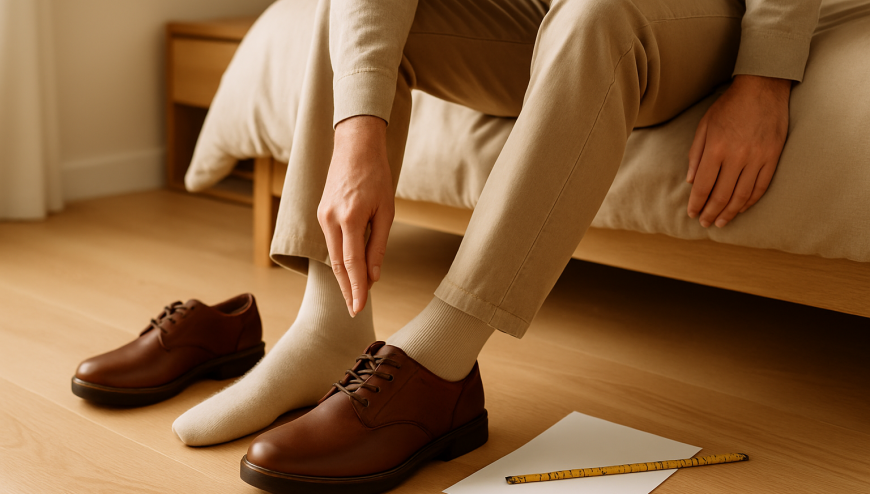
The best way to choose a size is to measure both feet at the end of the day, when they may be slightly more swollen. Do so while wearing the socks or stockings you would normally use with that footwear.
Place a sheet of paper on the floor, rest your heel against a wall, and keep your foot straight. Mark the longest point, measure the distance between the edge of the sheet and the mark, and repeat the process with the other foot. Use the measurement of the longer foot as your reference.
- Measure both feet: they are not always exactly the same length.
- Take the measurement while standing, with your weight distributed naturally.
- Note the measurement in centimeters to compare it with the model’s size guide.
Do not choose your size based only on the number
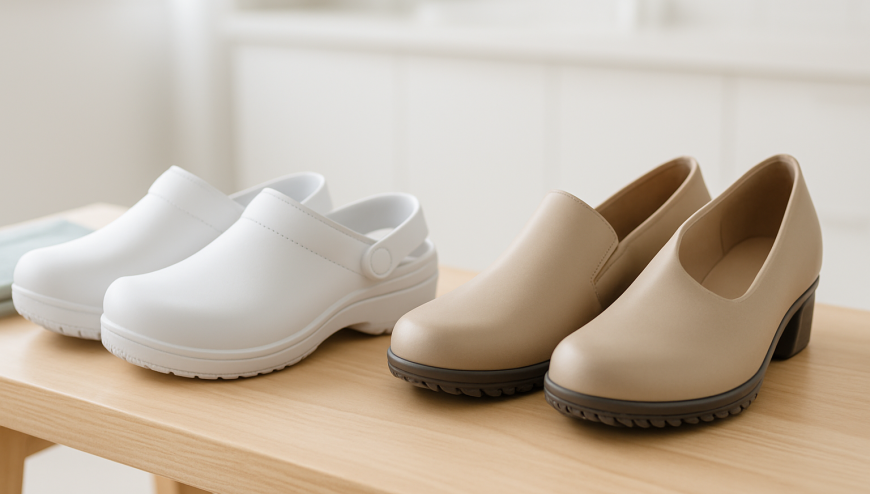
The same size can fit differently depending on the shoe’s last, design, and material. Lace-up shoes, loafers, ballet flats, or sandals can feel different even when they have the same size marking.
Before buying online, review the product-specific information and, if available, consult the size guide. If you are between two sizes, also consider the type of footwear, the thickness of your socks, and whether the model allows you to adjust the fit.
- Check the size guide associated with the product.
- Consider the width and volume of your foot, not just its length.
- Do not assume that you always need the same size in every model.
Check the length and toe room
When trying on footwear, your toes should be able to move without feeling squeezed. Your foot should not touch the toe box, especially when walking or going downstairs. There should not be too much extra room either, as your foot could slide around inside the shoe.
The widest part of your foot should line up with the widest part of the footwear. If you feel pressure on the sides from the very beginning, it is preferable to try another size, a different last, or a model made with more flexible materials.
- Walk around for a few minutes wearing both shoes.
- Check the space in front of your toes without trying to leave your foot loose inside the shoe.
- Avoid assuming that a very tight shoe will always adapt with wear.
Check the heel, instep, and fit
A good fit keeps the foot secure without squeezing it. The heel should not come out excessively when walking, but it should not be locked in place or experience chafing either. In the instep area, check that there is no uncomfortable pressure or marks caused by seams or rigid components.
Laces and Velcro fastenings allow you to adjust footwear more effectively to different insteps. In models without fastenings, such as some loafers or ballet flats, it is especially important that the shoe shape keeps the foot in place without the need to squeeze the toes.
- Try the footwear on both feet, as the fit may vary from one to the other.
- Use all the model’s fastenings and adjust the pressure evenly.
- Check that your foot does not slide forwards when walking.
Consider the material and how you will use the shoe
The material affects how the footwear feels and how it may adapt with wear. Flexible materials generally follow movement more comfortably, while a firmer structure can provide a feeling of greater support. In any case, the shoe should feel comfortable from the initial fitting, without relying on an uncomfortable break-in period.
You should also choose according to the intended use. For walking for many hours, look for a stable fit and an insole that feels comfortable to you. For occasional use, as well as considering the aesthetics, check that the height, support, and toe shape are suitable for you.
- Try the footwear in an environment and at a time similar to those of its usual use.
- If you use insoles, check that the model is compatible and maintains a proper fit.
- Keep the packaging and check the exchange conditions before removing tags or wearing the footwear outside the home for the first time.
Conclusion
To get the right size, measure both feet, consult the model information, and check the footwear by walking in it. Length, width, heel, instep, and the type of fastening are just as important as the indicated size. A well-fitting shoe should support the foot without putting pressure on it and allow the toes to move naturally.