

How to Choose Comfortable Footwear for Spending Long Hours on Your Feet
Choosing the right footwear can make all the difference when you have to spend much of the day standing. We explain what to look for to find a comfortable model suited to your routine.
Spending many hours on your feet means paying attention to more than just shoe design. The fit, stability, sole flexibility, and materials all affect how comfortable you feel throughout the day. In this guide, you’ll find practical criteria for choosing comfortable footwear based on your activity, the time of year, and your personal preferences.
Start by choosing the right size and fit
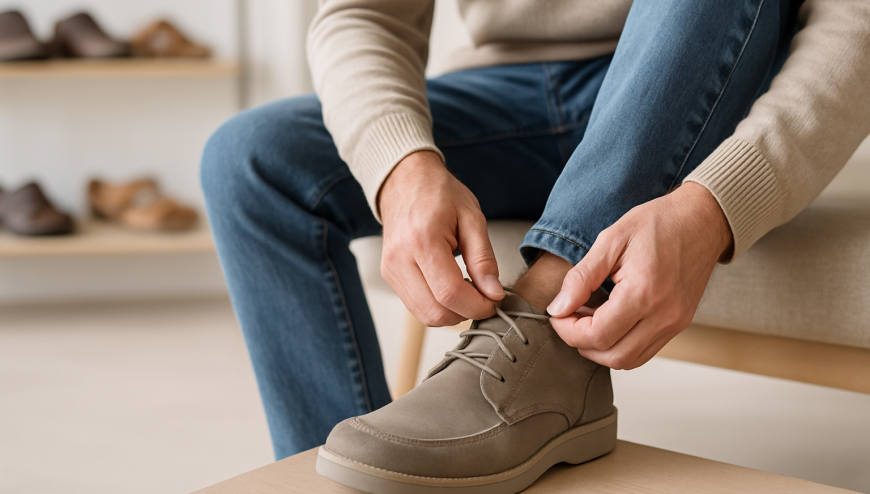
Comfortable footwear should support your foot without squeezing it. When trying on shoes, make sure your toes can move and that they do not rub against the front or sides. It is also a good idea to leave a small amount of room in front of your toes, especially if you are going to wear the footwear for many hours.
Try on both shoes and, if possible, do so at the end of the day, when your feet may be somewhat more swollen. Walk around in them for a few minutes to check that the heel stays in place and that your foot does not slide inside.
- Avoid both models that are too tight and those that are too loose.
- Check the width of the shoe shape, not just the length.
- Try on the footwear with the socks or stockings you normally plan to wear.
Look for a stable, flexible sole with good support
The sole should offer a balanced combination of stability and flexibility. An excessively rigid sole can hinder the foot’s natural movement, while one that is too thin can transmit more of the ground’s irregularities.
Also consider the sole tread and the type of surface on which you will walk or work. For long days, a stable base and secure footing are usually more important than a very lightweight sole or an especially thin design.
- Slightly flex the shoe to check that it follows your movement.
- Look for a stable base that does not twist easily.
- Consider the sole’s grip according to the environment in which you will use it.
Consider the heel and the footwear height
If you choose a heeled shoe, look for a height that allows you to walk naturally and maintain stability. For spending many hours on your feet, moderate heels, stable wedges, or flat styles with good structure may be more practical options than a high, narrow heel.
The width of the base also matters: a wide heel can provide a greater sense of stability. In any case, your choice should be adapted to your experience, the surface, and how long you will be wearing the footwear.
- Prioritize stability over height.
- Make sure your foot does not slide forward.
- Choose a height that does not alter your natural way of walking.
Choose materials and designs that promote comfort
Breathable and flexible materials can make footwear more comfortable during a long day. Choose finishes that adapt to movement without creating pressure points, and check the interior seams, joins, and reinforcements.
During the warmer months, sandals can be a suitable option if they provide enough support. At other times of year, loafers, lace-up shoes, or Velcro models offer different levels of adjustability and protection.
- Check that the interior seams do not rub.
- Consider Lycra shoes or other flexible materials if you are looking for greater adaptability.
- In summer, prioritize ventilated designs that keep the foot securely in place.
Choose the closure according to your needs
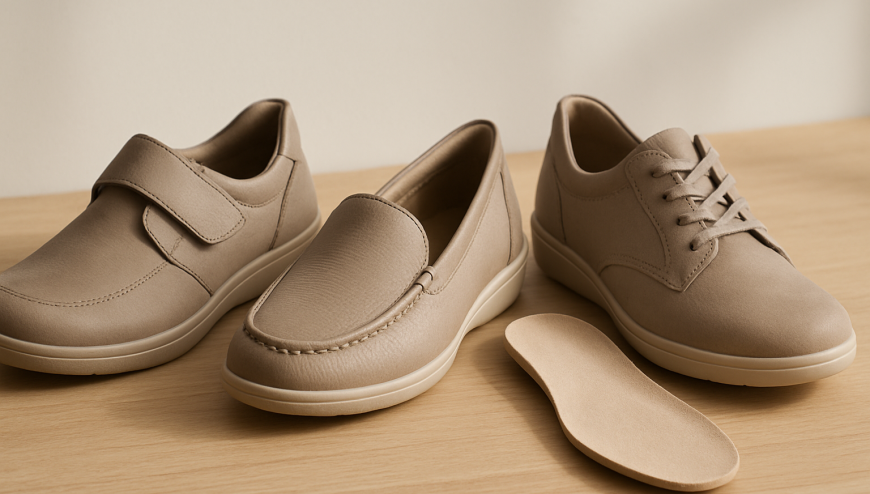
The closure system directly affects support. Laces allow you to adjust the shoe at different points, while Velcro makes it quick and easy to put on and take off and can be practical if you need to modify the fit during the day.
Loafers and other slip-on models are comfortable to put on, but you should check that they hold the heel correctly and do not slip off while walking. The best option will depend on the shape of your foot and how easily you need to adjust them.
- Laces: useful for customizing support.
- Velcro: practical and easy to adjust.
- Loafers: comfortable to put on, provided they hold the foot securely.
Take your activity and personal preferences into account
There is no single comfortable shoe for everyone. Footwear that works for standing at work may not be the same as what you need for walking, serving customers, or moving across different surfaces.
If you use insoles, check that the model is compatible and allows you to insert them without compressing your foot. You can also consider categories such as Healthcare Footwear or Medical Clogs and Professional Footwear when looking for models designed for specific working days, always reviewing their exact features before buying.
- Match the type of footwear to the environment and activity.
- Check compatibility with insoles if you use them.
- Don’t wear a new pair for an especially long day: break them in gradually.
Conclusion
To choose comfortable footwear for spending many hours on your feet, start with a proper fit and then assess stability, sole flexibility, heel height, materials, and the fastening system. Compare these aspects with your daily activity and your feet’s characteristics. An attractive design may be important, but comfort should be checked by walking and assessing how the footwear responds after several hours of wear.