

Shoes for Sensitive Feet: What Features Should Good Footwear Have?
Choosing shoes for sensitive feet involves looking beyond design. We explain how to assess the shape, materials, support and comfort to find footwear that better suits your needs.
When your feet are particularly sensitive, choosing the right shoes can make all the difference to everyday comfort. Chafing, pressure on the toes, or insufficient support are often related to a poor fit or unsuitable materials. That’s why, before focusing solely on style, it’s worth checking the shoe’s shape, flexibility, fastening system, and the space available inside. In this guide, you’ll find the most important features to consider when looking for footwear for sensitive feet.
A shoe last that respects the shape of the foot
The shoe last is one of the most important aspects. Shoes for sensitive feet should offer sufficient space in the toe area, without compressing the toes or forcing them into an uncomfortable position. The toe box should allow the toes to move with some freedom and should not taper into an overly narrow shape.
It is also important for the heel to be held securely without the shoe feeling tight. A balanced fit helps reduce excessive foot movement inside the footwear and can prevent chafing while walking.
- Make sure your toes do not touch the front of the shoe.
- Look for a width that suits your foot, especially around the forefoot.
- Try on both shoes, as your feet may not be exactly the same size.
Soft, flexible, and breathable materials
The materials that come into contact with your foot have a major impact on comfort. Soft, flexible surfaces adapt better to movement and are generally more comfortable when your feet are sensitive to pressure or chafing.
Breathability is also important for maintaining a more comfortable feel during wear. Check the inside, seams, and finishes to make sure there are no rigid or protruding elements that could cause discomfort.
- Prioritize flexible materials that move with your foot.
- Check that the inner seams are properly finished.
- Consider linings and insoles that feel pleasant against the skin.
- The Lycra Shoes and Comfort Footwear categories may be worth exploring when you are looking for adaptable materials or designs focused on comfort.
Adjustable support for a more precise fit
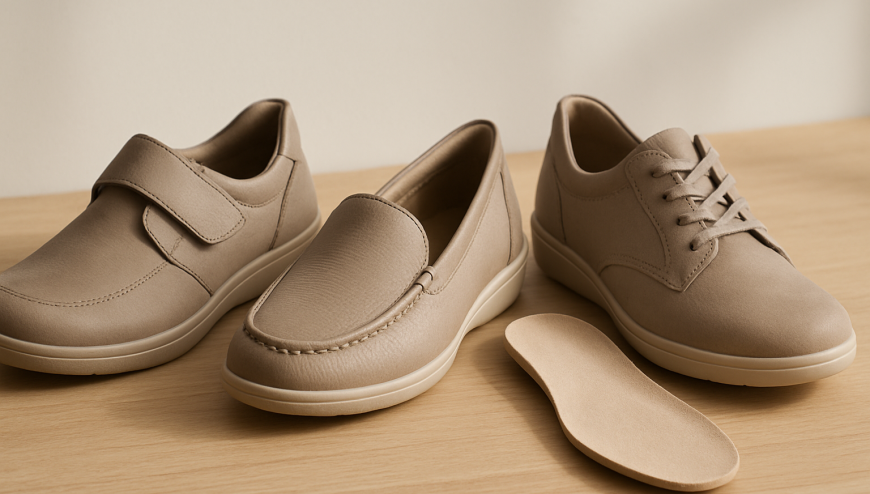
A good fastening system allows you to adapt the shoe to the volume of your foot. Laces offer gradual adjustment, while hook-and-loop fastening is practical for adjusting and removing footwear easily. In both cases, the support should be secure but never excessively tight.
Loafers and other slip-on styles can be comfortable if the shoe last fits well, although it is important to make sure they do not slip off while walking or force you to grip them with your toes.
- Choose laces or hook-and-loop fastening if you need to adjust the fit throughout the day.
- Make sure the heel does not slip when walking.
- Avoid fastenings that create pressure points across the instep.
- You can browse the Velcro Shoes, Lace-Up Shoes, Loafers and Moccasins categories according to your preferred type of fastening.
Insole, interior and the option to use your own insoles
A comfortable insole can improve the overall feel of the footwear, but not all insoles suit every foot. If you use your own insoles, make sure the model has enough interior depth and that the original insole can be removed when necessary.
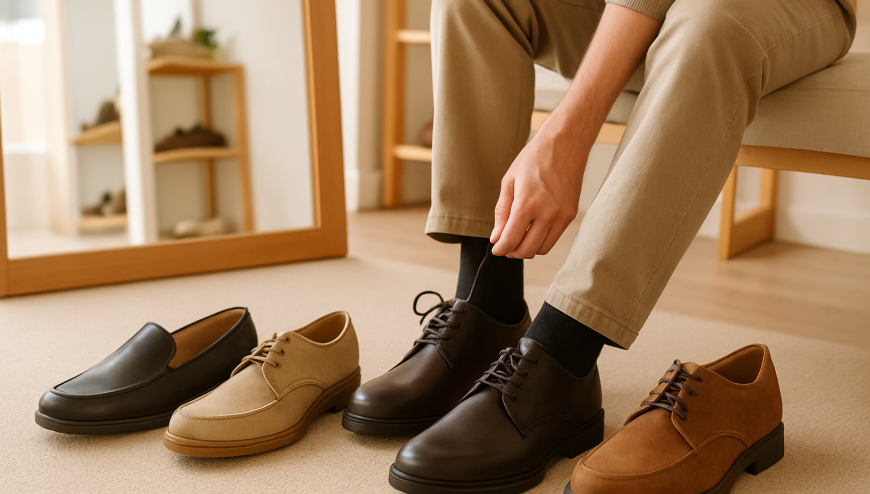
The interior should leave enough room without allowing the foot to move around. It is also advisable to try the shoes with the socks or tights you usually wear, as their thickness can change the fit.
- Look for models with removable insoles if you need to insert your own insole.
- Make sure the instep is not compressed when inserting the insole.
- Browse the Footwear for Orthotics and Shoes for Orthotics categories when this feature is a priority.
Stable sole and moderate heel
The sole should provide a stable base and some flexibility where the foot bends while walking. An excessively rigid sole may feel unnatural, while one that is too thin may transmit more of the ground’s irregularities.
As for the heel, the choice depends on your preferences and the stability you need. For prolonged use, it is usually more practical to choose a moderate height and a base that provides good support. The essential thing is to be able to walk safely without compensating for the shoe’s fit.
- Consider a sole with good grip for the intended use.
- Make sure the shoe does not twist easily, but flexes in the right area.
- For everyday wear, consider low-heeled, flat or stable wedge models.
- The Sport Shoes, Ballet Flats, Wedges and Heeled Shoes categories allow you to compare different styles according to the occasion.
How to try on shoes before making your decision
The fitting stage is key. Put them on calmly, walk around for a few minutes and pay attention to any pressure, slipping or rubbing. Footwear should feel comfortable from the outset; it is not advisable to rely on intense discomfort disappearing with use.
If you shop online, check the size guide and the exchange or return conditions before completing your order. Read the product description to learn about the materials, the type of fastening, the insole and the sole height.
- Try on the shoes at the end of the day, when your feet may be somewhat more swollen.
- Walk on a safe surface and check your stability.
- Do not choose a larger size just to gain width: it may cause your foot to slide around.
- If discomfort persists or you have a specific need, consult a healthcare professional.
Conclusion
Good footwear for sensitive feet should combine a suitable fit, soft materials, adjustable support, a comfortable interior and a stable sole. There is no single model that works for everyone: the choice will depend on the shape of your foot, the intended use and your fit preferences. Taking a few minutes to review these features and try on the footwear carefully will help you make a more informed purchase and find a comfortable option for your everyday life.