

How to tell if a shoe fits you well: A guide to getting the right size when shopping online
Buying footwear online can be easy if you know how to measure your foot and check the key fit points. We explain how to get the right size and avoid common mistakes.
Choosing the right size when buying shoes online isn’t just about selecting the number you usually wear. The shape of the style, the material, the width of the last, and the type of footwear can all change how the fit feels. That’s why it’s a good idea to take a few measurements and review the product information before placing your order. In this guide, you’ll find a practical method for checking whether a shoe fits well, both before buying it and when you receive it at home.
Measure your feet before choosing your size
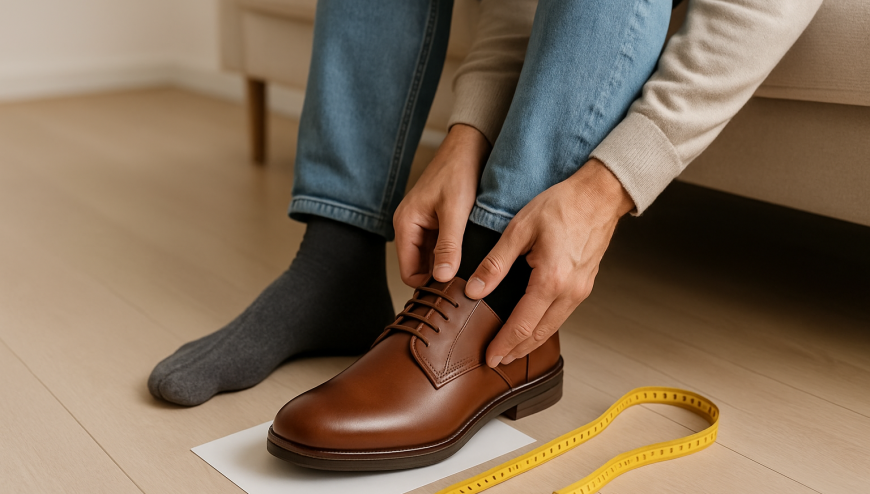
The most reliable way to start is to measure both feet at the end of the day, when they may be slightly more swollen. Place a sheet of paper on the floor, rest your heel against a wall, and place your foot on top, distributing your weight naturally. Mark the point farthest from your toes and measure the distance between the edge of the paper and that mark.
Repeat the process with the other foot and use the measurement of the longer foot as your reference. Wear the socks or hosiery you would normally wear with that type of footwear, as their thickness can affect the space inside.
- Measure both feet: they are not always exactly the same length.
- Do it standing up, not sitting down, for a more realistic measurement.
- Write down the measurement in centimeters so you can compare it with the product’s size chart.
Check the style’s size guide
The conversion between centimeters and shoe size can vary depending on the brand, country of manufacture, and last. Before choosing, look for the specific size guide for the style and compare it with your foot measurement. If the product details include information about the fit, material, or width, take that into account as well.
Don’t assume that you’ll always need the same size in ballet flats, lace-up shoes, sandals, or boots. The design and shape of the footwear can change how roomy and secure it feels.
- Prioritize the specific size chart over general conversions.
- Check whether the measurements refer to foot length or the shoe’s inside measurement.
- If you’re between two sizes, review the type of footwear and the fastening system before deciding.
Check the length: toes need room
A well-fitting shoe shouldn’t press against your toes or make them hit the toe box as you walk. When trying it on, there should be a small amount of space in front of your toes, without your foot sliding forward. With closed styles, walk around for a few minutes and pay attention to the toe area, especially if the design is narrow or has a pronounced shape.
It’s also not a good idea to make up for insufficient length by relying on the footwear to stretch. Some materials may adapt slightly with wear, but a shoe that is too short will remain uncomfortable.
- Your toes should be able to move without feeling squeezed.
- Your longest toe shouldn’t touch the toe box when walking.
- Check the fit on both feet, starting with the larger one.
Check the width, heel and support
Size does not only determine length. A shoe can be long and still be too narrow or too loose. Check whether the instep is under pressure, whether the foot extends over the sides of a sandal, or whether the heel lifts excessively when taking steps.
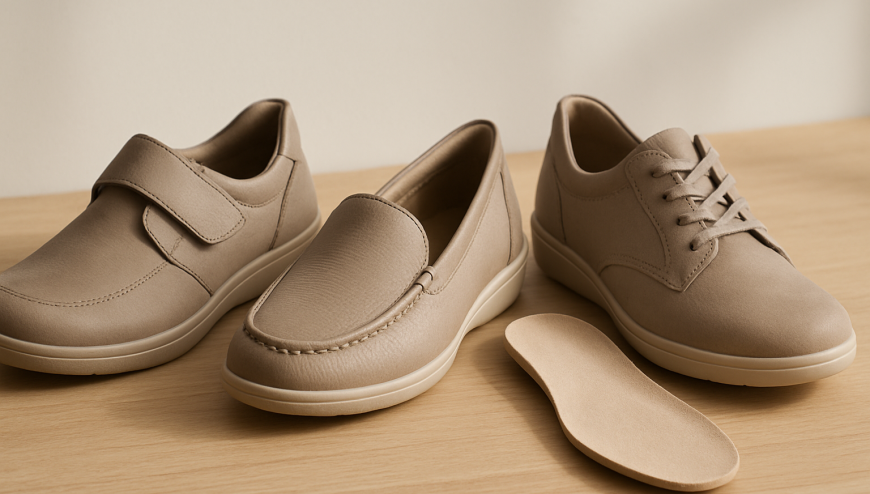
Laces, Velcro, buckles and other fastening systems allow you to adjust the footwear more precisely. By contrast, styles without fastenings should provide balanced support: they should not be tight enough to prevent the foot from slipping out, nor so loose that they make you curl your toes when walking.
- The heel should remain reasonably secure without rubbing.
- The instep should not be compressed by the upper or fastening.
- In sandals, the foot should remain within the sole without extending over the front or sides.
- Consider styles with laces or Velcro if you need to adjust the support more precisely.
Try the footwear on at home in realistic conditions
When you receive your order, try on both shoes on a clean surface and for long enough to walk, sit down and go up or down a few steps. Do so with your usual socks or tights and, if you use insoles, check that they fit correctly only in compatible styles.
Look out for signs of a poor fit: localised pressure, uncomfortable creasing, constant slipping, immediate rubbing or a feeling of instability. A slight difference in sensation between one foot and the other may be normal, but the footwear should feel comfortable and secure on both.
- Always try on both shoes, not just one.
- Walk in them before deciding whether the size is right.
- Keep the box and follow the exchange or return conditions indicated by the store.
- If you need insoles, check that the design is compatible and does not reduce the interior space too much.
Common mistakes when buying footwear online
One of the most common mistakes is choosing a size based solely on habit. It is also common to measure your foot in the morning, ignore the width, assume that all materials stretch equally or buy a larger size for extra comfort without checking whether the heel is loose.
The best decision combines your foot measurement, the information in the product description and a careful try-on at home. If the style does not suit the shape of your foot, changing the design may be more effective than changing the size.
- Don't choose a size based solely on the one you wear in another brand.
- Don't confuse width with a shoe that is excessively long.
- Don't wear new footwear for many hours if you haven't yet checked its fit.
- Don't ignore the retailer's care, exchanges, and returns instructions.
Conclusion
To get the right size when buying shoes online, measure both feet, consult the specific model's size guide, and check length, width, heel fit, and support. The correct size is the one that lets you walk comfortably, without pressure or unnecessary slipping. If the design doesn't fit the shape of your foot well, consider a different type of footwear or a more adjustable fastening system instead of automatically choosing a different size.