

Leather or Textile Shoes: Differences, Advantages, and Which to Choose
Leather and textile materials offer different sensations and performance. We help you compare both options so you can choose your next shoes with greater confidence.
When choosing shoes, the material is just as important as the shape, sole or fastening system. Leather and textiles can offer different sensations in terms of fit, flexibility and care, but neither option is better in every case: the choice depends on how you plan to use them, the time of year and how each model fits your feet. In this guide, we review their differences so you can shop with greater confidence.
What is the difference between leather and textile material?
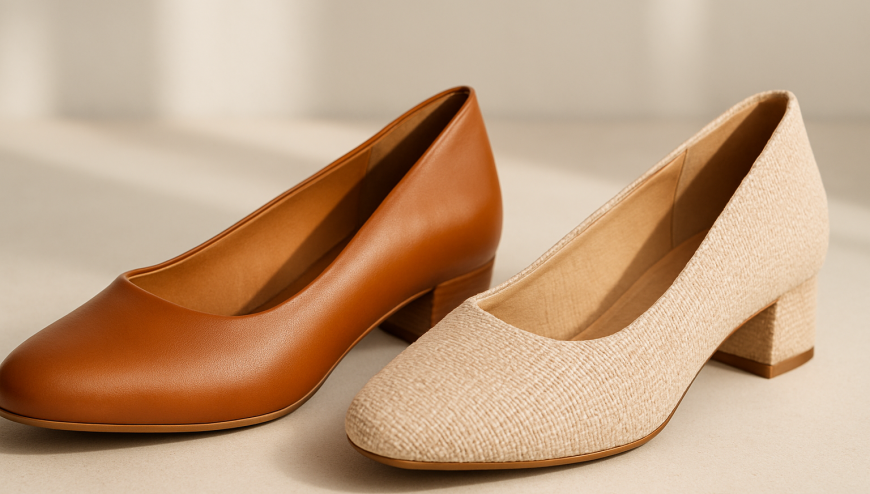
Leather is a material of animal origin that can have very different finishes, thicknesses and levels of softness. In footwear, it usually provides a firm structure, although flexible and particularly soft leathers are also available.
Textile material includes fabrics and fibres with different compositions. It may be used on the upper, lining or various parts of the shoe, making it possible to create lightweight, flexible designs with greater adaptability. It is therefore always advisable to check the product details for the specific model, as not all textiles perform in the same way.
- The product label or description helps identify the outer material, lining and sole.
- The material alone does not determine comfort: the last, cushioning, insole, sole and fit also play a role.
Advantages of leather shoes
Leather shoes often offer a sense of solidity and a classic finish. In many models, leather can gradually adapt with wear, provided the size and last are right from the outset. You should not buy a shoe expecting it to compensate for an incorrect size.
They can also be a practical option for those looking for footwear with a more formal appearance that is easy to combine. Their durability and upkeep depend on the type of leather, the construction and the care recommended by the manufacturer.
- Versatile appearance for formal and everyday looks.
- Structured feel, especially useful in models such as loafers or lace-up shoes.
- They may retain their appearance better with cleaning and products suitable for the finish.
- It is important to protect them from moisture and avoid applying products that are not compatible with their type of leather.
Advantages of textile shoes
Textile models often stand out for their lightness and flexibility. In certain constructions, the fabric can provide a greater sense of freedom across the instep, although the result will depend on the elasticity, lining and design of the shoe.
They are common in casual, sportswear and warm-weather styles. In addition, some fabrics may offer greater ventilation than other materials, but not all have the same breathability or water resistance.
- They can be lightweight and flexible for everyday use.
- Fabrics are available with different degrees of elasticity and adaptability.
- They usually work well with casual and sporty styles.
- Be sure to check the cleaning instructions, as not all textiles can be washed or exposed to water in the same way.
Which material to choose based on use and season
For work or situations that require a more polished look, a leather shoe may be a good fit thanks to its finish and structure. By contrast, for walks, daily commutes or casual outfits, a textile model can be a comfortable alternative if the last and fit are suitable.
In spring and summer, some lightweight fabrics may feel cooler, while certain leather models also work well if they have a suitable design. For autumn and winter, it is worth considering the lining, thickness, sole and protection against moisture, not just the outer material.
- Formal use: consider its appearance, structure and ease of pairing.
- Daily use: prioritize a comfortable last, a secure fastening and a stable sole.
- Warm weather: check the lining, ventilation and weight of the model.
- Wet or cold days: check the materials and care instructions provided by the manufacturer.
How to get the fit right, beyond the material
A good material cannot compensate for a shoe that pinches, slips or rubs. When trying it on, make sure your toes can move without being compressed and that your heel remains secure while walking. If you use insoles, check that the model is compatible and does not reduce the interior space too much.
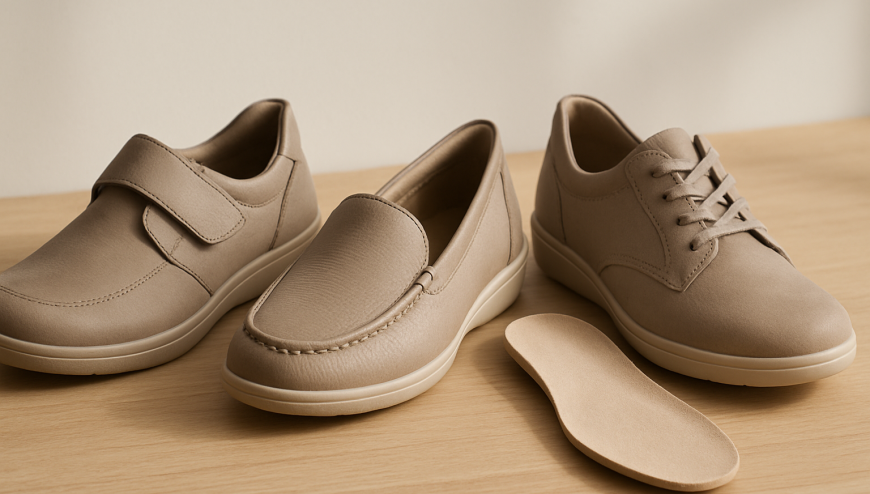
It is also worth considering the time of day and the type of socks you will wear with the footwear. On lace-up or Velcro models, the fastening allows you to adjust the instep more precisely; in loafers and other shoes without a fastening, choosing the right last and size is especially important.
- Measure both feet if possible and choose the size based on the longer foot.
- Walk for a few minutes to check the fit while moving.
- Look for seams or reinforcements that do not interfere with sensitive areas.
- If the shoe is designed for insoles, confirm the available space and whether it has a removable insole in the product description.
Basic care to extend the life of your footwear
Care depends on the specific material, but there are some general guidelines. Allow your shoes to air after wearing them and avoid storing them while damp or near an intense heat source. Alternating pairs also helps each model rest between uses.
For leather, use products specifically suited to the corresponding finish and test any product on an inconspicuous area. For textiles, remove dirt gently and follow the manufacturer’s recommendations before applying water or cleaning products.
- Store footwear clean and completely dry.
- Do not use the same care product for leather and textiles without checking its compatibility.
- Check the instructions on the label or in the model’s product sheet.
- Use a shoe tree or soft stuffing if you need to preserve the shape during storage.
Conclusion
Choosing between leather and textile shoes depends above all on their intended use, the season, the style and the fit you need. Leather can provide a more structured and versatile appearance, while textiles often stand out for their lightness and flexibility in certain designs. Before deciding, check the model’s materials, last, fastening, sole and care instructions. A well-chosen shoe should be suitable for your routine and comfortable from the very first moment, without relying on the material to correct an unsuitable size or fit.